Homework Meaning Explained Simply for Kids (2026 Guide)
Homework, an important part of education, holds the key to enhancing knowledge retention and promoting independent learning. Understanding Homework meaning helps kids to know the purposes behind the assignments for kids which they complete after school. Whether it’s math problems or extensive reading assignments, homework gives students the chance to manage their time and learn how to complete their tasks responsibly, skills that will benefit them after graduation.
Homework is a vital component of learning. Homework meaning extends far beyond small daily assignments; it reflects how education helps students build good learning habits and discipline. Homework is not just about assignments and grade calculations; it plays a crucial role in shaping learning habits and discipline for kids.
Explore More: 50+ Best Math Riddles For Kids With Answers In 2026 To Solve
What Is Homework?
Homework is work or tasks given by the teacher in class to complete at home. Homework often feels like a burden, as it serves as a crucial bridge between school learning and home understanding.

Simple Definition
“Homework means learning tasks, done at home to practice school lessons.”
Homework encourages critical thinking and problem-solving skills, essential for real-world applications. Parents can also get involved, turning homework into a collaborative experience.
Synonyms of Homework
The word “homework” itself can be a misnomer; it often denotes not just tasks meant for home but the broader spectrum of learning that extends into every aspect of life. Homework has many synonyms, each highlighting a different aspect:
- Assignment or project – tasks to complete
- Exercise – practice and mastery
- Task – responsibility and commitment
- Study work or scholarly duties – academic focus
These words show that homework is more than chores; it’s a way to engage with knowledge and grow.
Homework Meaning For Kids in Simple Words
Homework meaning, in simple words, refers to tasks assigned by teachers for students to complete outside of school hours. It’s a tool designed to reinforce what’s learned in the classroom. When students engage with homework, they have the chance to explore subjects at their own pace, deepening their understanding and fostering critical thinking. Here is an easy way to understand homework meaning:
- School = learning new things
- Homework = practicing those things
Homework helps students to:
- Remember lessons
- Improve skills
- Learn responsibility
- Become independent learners
So homework is not punishment, it is practice for success.
Read More: 101+ Easy And Funny Candle Riddles For Kids With Answers
Homework Meaning in English
Homework meaning, in English, means more than simply completing assignments outside school. It embodies a vital bridge between classroom learning and real-world application. By engaging with concepts at home, students memorize facts and cultivate critical thinking skills and the ability to draw connections between ideas. Completing homework encourages a deeper understanding of the curriculum and fosters responsibility. The evolving nature of homework meaning in English reflects societal shifts.
Meaning of Homework for Students
The meaning of homework for students transcends mere assignments; it becomes a lens through which they develop essential life skills. Through these tasks, students cultivate time management and critical thinking, vital assets that extend well beyond academic walls. A well-structured homework routine encourages them to take ownership of their learning.
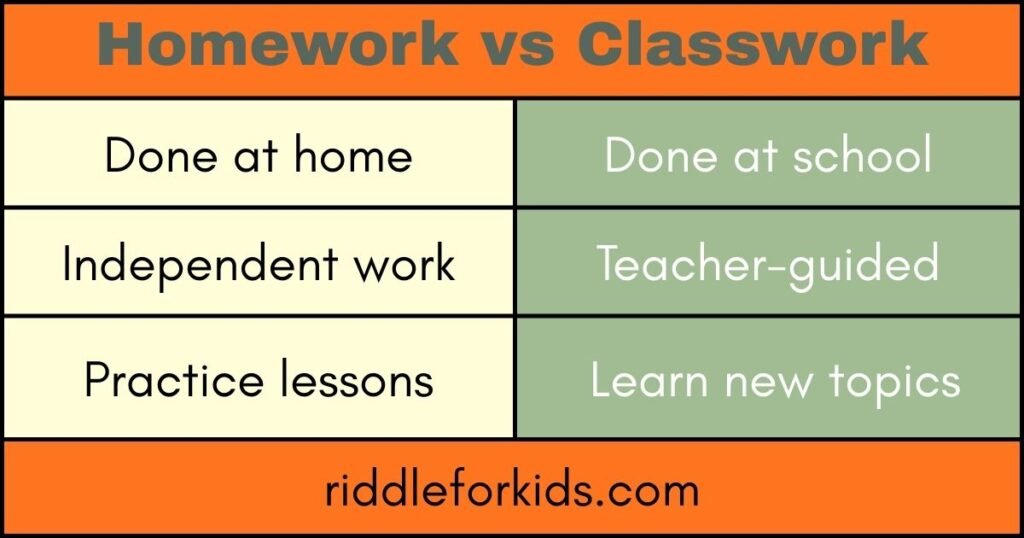
Homework vs Classwork
Many students confuse homework and classwork, as both are important parts of education.
Why Do Teachers Give Homework?
Homework serves as a bridge between school and home, fostering a partnership between educators and families. It encourages students to take ownership of their learning journey, developing self-discipline and time management skills that are essential in both academic and personal spheres. Homework can illuminate the different ways that students learn. Homework connects school learning with home learning. Main Reasons Teachers Give Homework:
1. Practice Makes Learning Strong
When students repeat lessons at home, they understand topics better.
2. Improves Memory
Homework helps the brain remember information for a longer time.
3. Builds Responsibility
Students learn to manage time and complete tasks on their own.
4. Prepares for Future Lessons
Homework helps students get ready for the next class.
5. Helps Parents Stay Involved
Parents can see what their children are learning in school.
Examples of Homework for Kids
Creative home projects can truly inspire learning. Examples of Homework for kids can look different depending on the subject. Here are common examples:
Reading Homework
- Reading storybooks
- Practicing pronunciation
- Learning new words
Writing Homework
- Writing sentences
- Essay writing
- Copywriting practice
Math Homework
- Solving sums
- Practicing multiplication tables
- Word problems
Creative Homework
- Drawing pictures
- Coloring activities
- Craft projects
Study Homework
- Learning science facts
- Preparing presentations
Memorizing lessons
Homework is designed to make learning fun and useful.
Read More: 70+ Shadow Riddles For Kids That Follow You Everywhere
Types of Homework
Homework is not always the same at all times. Teachers use different types depending on learning goals.
1. Practice Homework
Used to repeat lessons taught in class.
2. Preparation Homework
Helps students prepare for upcoming topics.
3. Extension Homework
Encourages students to explore topics more deeply.
4. Creative Homework
Includes drawing, storytelling, or projects.
5. Revision Homework
Helps students prepare for tests and exams.
Each type helps learning differently.
Why Homework Is Important for Kids
Homework fosters essential life skills like time management and responsibility. Kids learn to prioritize tasks and meet deadlines, lessons that will serve them well throughout life. Understanding **why homework is important for kids** helps parents and educators support students in becoming self-sufficient learners. Homework plays a big role in education. It helps children grow academically and personally.
Benefits of Homework
1. Improves Learning Skills
Students understand subjects better through practice.
2. Builds Discipline
Regular homework creates good study habits.
3. Boosts Confidence
Completing homework gives a feeling of achievement.
4. Develops Time Management
Kids learn how to plan their time wisely.
5. Encourages Independent Thinking
Students learn to solve problems on their own.
Homework teaches life skills, not just school subjects.
How Homework Helps the Brain
Homework plays a crucial role in strengthening the brain’s neural connections. When students engage with material outside the classroom, they create a cycle of learning that enhances memory retention. Each problem solved and concept reviewed makes pathways in the brain stronger, making it easier to access knowledge in the future. Regular homework routines can even stimulate creativity, as students often explore different approaches to problem-solving.
When students do homework:
- The brain reviews information
- Connections between ideas grow stronger
- Learning becomes long-lasting
This process is called practice learning. The more students practice, the easier learning becomes. Homework acts like exercise for the brain.
Enjoy More: 100+ Funny March Riddles For Kids To Enjoy The Spring
Fun Fact About Homework
Did you know?
“The idea of homework has existed for more than 100 years”. Schools started giving homework regularly to help students practice lessons outside the classroom. Today, homework is used all around the world to support learning.
Easy Homework Tips for Kids
Easy homework tips for kids can transform mundane assignments into manageable and rewarding experiences. Small habits make homework faster and easier. Homework becomes easy when done the right way.
Helpful Tips
- Make a fixed homework time
- Study in a quiet place
- Finish difficult work first
- Take short breaks
- Keep books organized
- Ask questions if confused
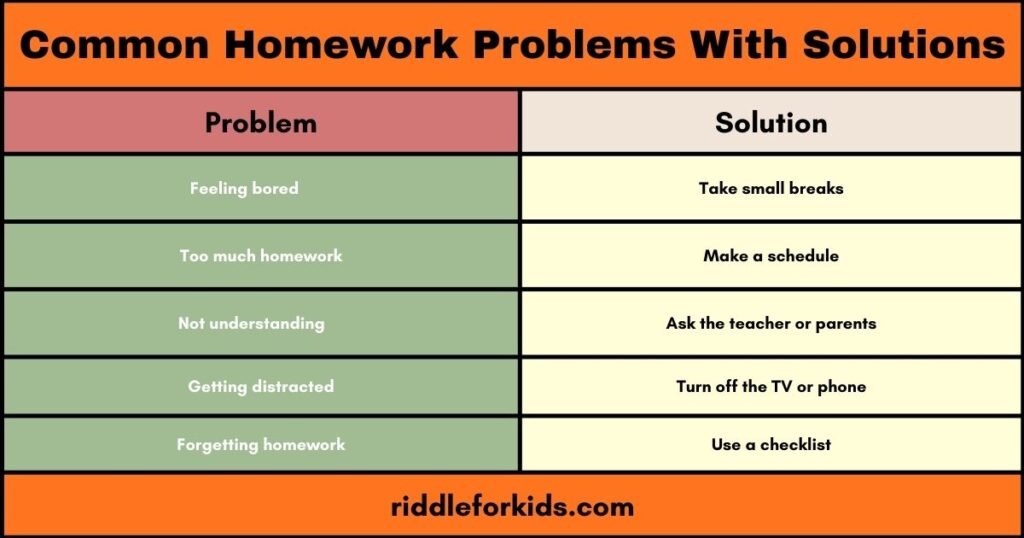
Common Homework Problems With Solutions
Balancing homework with other commitments can feel overwhelming for students. One common problem is managing time effectively. Another hurdle is understanding the material. Students often find themselves stuck on specific topics. Sometimes students struggle with homework. Here are common problems and solutions.
Role of Parents in Homework
Parents play a crucial role in homework, not just as overseers but as active participants in their child’s learning journey. Their involvement can ignite a passion for knowledge rather than create stress around assignments. By engaging with the material, parents can offer insights that deepen their child’s understanding.
Parents serve as role models in developing effective study habits. Parents play an important role in helping children succeed. Parents can:
- Create a study routine
- encourage learning
- help explain difficult topics
- praise effort and progress
Conclusion
Homework is an essential part of a student’s learning journey. Homework meaning is school work that students complete at home to practice what they learned in class. It helps reinforce classroom lessons and encourages independent thinking. With effective study habits and a positive attitude, homework can become a valuable tool rather than a burden. It prepares children for exams, future lessons, and real-life challenges. Homework becomes easy, fun, and rewarding for every student with the right attitude and good habits.
FAQs
What does homework mean?
Homework means tasks assigned by teachers for students to complete outside of school.
Why do teachers assign homework?
Teachers assign homework to help students practice skills, reinforce lessons, and promote learning.
What kinds of tasks count as homework?
Homework can include reading, writing assignments, projects, or studying for tests.
How does homework help students?
Homework helps students understand subjects better and improves time management and responsibility.
What if I don’t understand my homework?
If you don’t understand your homework, ask your teacher, classmates, or look for online resources for help.