Has in Spanish — Complete Beginner Guide In 2026 (With Examples & Easy Rules)
Mastering just one little verb can unlock a whole new level of fluency in Spanish. The verb “has” is a key component of Spanish, and understanding its use is crucial for beginners building a solid foundation. In this complete beginner’s guide, we’ll break down the rules and provide clear examples to make learning “has in Spanish” easy and engaging. In Spanish, “has” can mean different things depending on grammar, sentence structure, and verb usage. It may translate as “has,” “you have,” or even be part of a past tense expression.
The verb “has in Spanish” is a simple yet essential building block for mastering Spanish, and understanding its use can dramatically improve your communication skills. Let’s explore how simple it is to use this important verb in everyday Spanish conversations.
Read More: 121+ Spanish Riddles For Kids To Boost Logic And Learning
What does “Has in Spanish” mean?
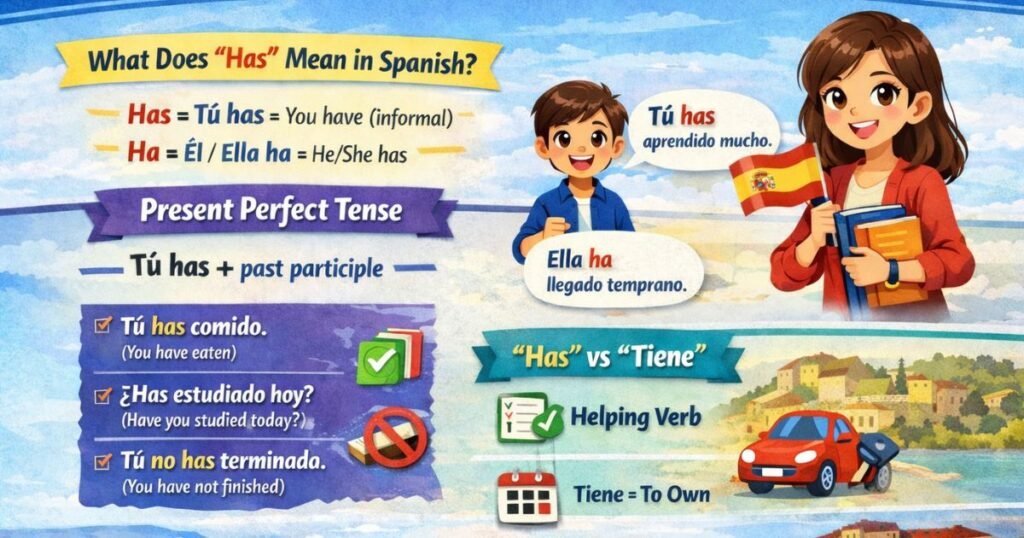
“Has in Spanish” may seem simple, but it holds significant meaning and relevance in everyday dialogue. Understanding its nuances is crucial not only for language learners but also for anyone looking to connect more deeply with Spanish-speaking cultures. First, we need to understand that:
“Spanish does not translate words one-by-one from English.”
- In English, “has” usually comes from the verb “to have.”
- In Spanish, this meaning comes from the verb: “Haber = to have (helper verb).”
But Spanish uses haber mainly as a helping verb rather than for ownership.
Enjoy More: 50+ Best Math Riddles For Kids With Answers In 2026 To Solve
Understanding the Verb Haber
Understanding the Verb Haber opens a window into the intricacies of Spanish grammar. Unlike the more commonly used verbs like “ser” or “estar,” haber primarily serves as an auxiliary verb in various tenses, especially in forming perfect tenses. Before learning usage, you must know how haber changes.
Present Tense of Haber
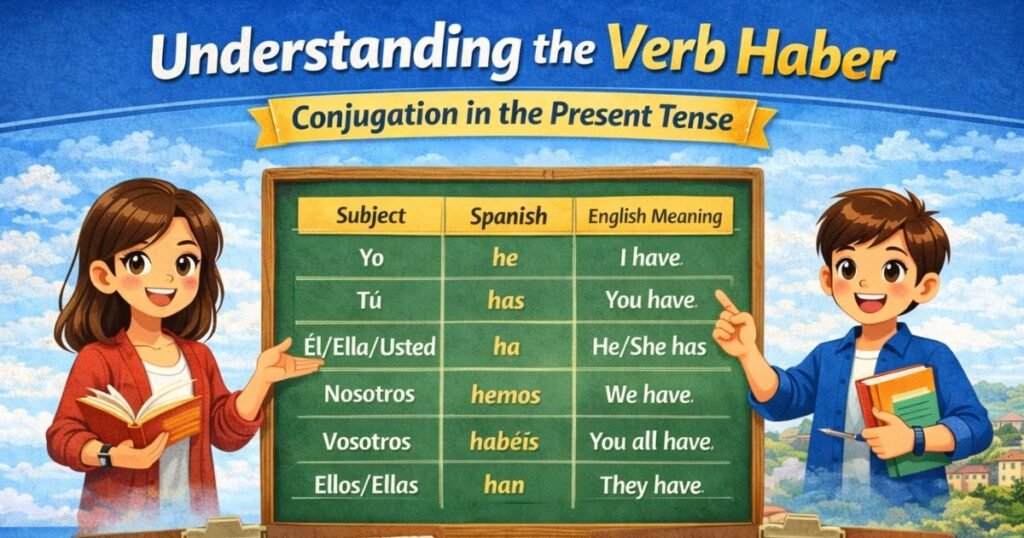
Notice carefully: This small difference is very important.
- has = you have (tú)
- ha = he/she has
Two Main Meanings of “Has” in Spanish
In Spanish, the verb “has” serves as an essential bridge in communication, encapsulating two main meanings that enrich our understanding of the language. The word has appears in Spanish in two main ways:
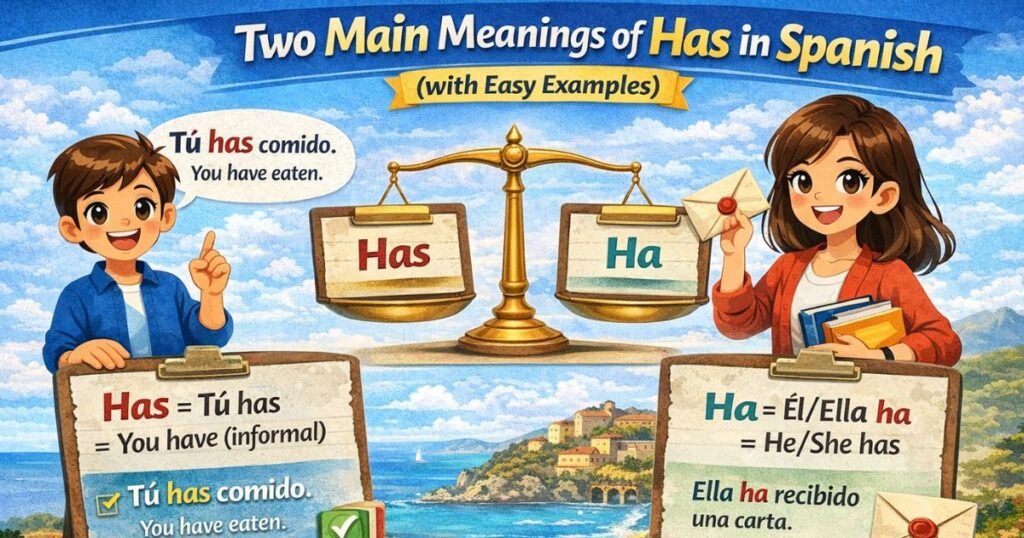
- Has = You have (informal)
- Ha = He/She/It has
Both come from the verb haber.
Read More: 101+ Easy And Funny Candle Riddles For Kids With Answers
Use #1: “Has” for Present Perfect Tense
The word “has” plays a vital role in forming the present perfect tense, a structure that connects past actions to the present moment. In English, we use “has” before the past participle of a verb to indicate experiences, changes, or repeated actions up until now.
In Spanish, “has” is used with tú (you informal), while “ha” is used with él, ella, or usted (he, she, or you formal). Just like in English, “ha” sets the stage for sharing life achievements or actions that resonate today. The most common use of has in Spanish is forming the present perfect tense. The present perfect talks about actions that:
- Happened recently
- Happened at an unknown time
- Still affects the present
Structure of Present Perfect
Subject + haber (has/ha/etc) + past participle
Formula:
Tú + has + past participle
What Is a Past Participle?
A past participle is a verb form that often indicates completed action. In English, it’s commonly used in perfect tenses, such as “have eaten” or “has seen.” In Spanish, the equivalent terms add a layer of nuance to the language, especially with verbs like “ha” for “has.” In Spanish, words like “comido” (eaten) or “vivido” (lived) show how actions linger past their completion. Past participles are formed like this:
| Verb Ending | Change To | Example |
| -ar | -ado | hablar → hablado |
| -er | -ido | comer → comido |
| -ir | -ido | vivir → vivido |
Examples Using “Has in Spanish”:
| Examples | English | Spanish |
| 1 | You have eaten. | Tú has comido. |
| 2 | You have studied Spanish. | Tú has estudiado español. |
| 3 | You have finished the homework. | Tú has terminado la tarea. |
Use #2: Difference Between “Has” and “Ha”
When discussing the difference between “has” and “ha,” it’s essential to recognize that context is everything.“Has” is the second-person singular form of the verb haber in Spanish, meaning “you have” (informal). On the other hand, “Ha” is used for third-person singular subjects (he, she, or you formal). This lively use adds character to conversations, making language more expressive and engaging.
Understanding how to differentiate between “has” and “ha” can enhance your communication skills. Misusing them may confuse your listeners or readers, potentially leading to misunderstandings. Many beginners mix these two.
- HAS → Tú (You informal)
Used when talking to one person informally.
Tú has aprendido mucho.
(You have learned a lot.)
- HA → Él / Ella (He/She)
Ella ha llegado temprano.
(She has arrived early.)
Quick Comparison
| English | Spanish |
| You have eaten | Tú has comido |
| He has eaten | Él ha comido |
| She has eaten | Ella ha comido |
One missing letter completely changes the meaning.
Use #3: Asking Questions with “Has in Spanish”
Asking Questions with “Has in Spanish” opens up a world of engaging conversations. When you ask questions using “has,” you create a direct link to the person you’re communicating with. For instance, “¿Has visto esta película?” invites an exchange that not only seeks information but also encourages dialogue about shared experiences. This simple structure can deepen your connection, making the conversation feel more personal. Spanish questions keep the same structure.
Examples:
- ¿Has visto la película?
(Have you seen the movie?)
- ¿Has terminado?
(Have you finished?)
- ¿Has estudiado hoy?
(Have you studied today?)
Notice:
No extra word like “do” is needed.
Use #4: Negative Sentences with “Has in Spanish”
Negative sentences with “has in Spanish” open up new ways to express thoughts and feelings. For example, using “no” before the verb allows you to negate a statement effectively. The simple change helps you convey a lack of something, emphasizing absence or denial in conversation. To make negative sentences, simply add no before the verb.
Structure:
Tú no has + past participle
Examples:
- You have not eaten.
(Tú no has comido.)
- You have not finished.
(Tú no has terminado.)
- You have not called me.
(Tú no me has llamado.)
When Spanish Uses “Has” But English Does Not
In the intricate dance between Spanish and English, one fascinating aspect is how the Spanish language often employs “has” where English falls silent. When Spanish uses “has” but English does not, it not only fills grammatical gaps but also reveals the interconnectedness of time, experience, and identity within a culture. Sometimes Spanish uses the present perfect, where English uses the simple past. This difference confuses learners, but it is normal.
In Spanish:
¿Has desayunado?
In Literal translation:
Have you eaten breakfast?
In Natural English:
Did you eat breakfast?
Has vs Tiene (Very Important Difference)
When discussing “has” vs. “tiene,” a core distinction lies in the contexts of English and Spanish. “Has,” used in English, serves as both a possessive verb and a helping verb in perfect tenses, conveying ownership or experience — like “She has a book” or “He has finished his work.” In contrast, “tiene” is the Spanish equivalent of “has” and typically denotes possession but excludes its helping role. This crucial difference means that while both words translate similarly, they function differently in their respective languages. This is one of the biggest mistakes beginners make.
Wrong Idea:
Has = tiene
Correct Rule:
| Spanish Verb | Meaning |
| haber | helping verb |
| tener | possession (to own) |
Examples:
- You have a car
Tú tienes un coche. (ownership)
- You have eaten
Tú has comido. (action completed)
Common Verbs Used with “Has”
In everyday conversation, certain common verbs pair seamlessly with “has,” enhancing clarity and meaning. This dynamic interaction underscores how verb choices shape our storytelling. Engaging with these common verbs can deepen connections in conversations, revealing layers of understanding and fostering a sense of community. Here are popular verbs learners often use.
| Infinitive | Past Participle | Example |
| hacer | hecho | has hecho |
| ver | visto | has visto |
| decir | dicho | has dicho |
| escribir | escrito | has escrito |
| abrir | abierto | has abierto |
Example Sentences:
- Tú has hecho un buen trabajo.
- Tú has visto ese lugar.
- Tú has dicho la verdad.
Everyday Conversation Examples
Everyday conversation examples can reveal much about our relationships and social skills. Everyday conversation examples like these remind us that small talk shapes our connections. Engaging in these light conversations can make a significant difference, creating a warm atmosphere where ideas and friendships flourish.
Learning becomes easier with real situations.
At School
Has estudiado mucho hoy.
(You have studied a lot today.)
With Friends
Has llegado tarde otra vez.
(You have arrived late again.)
At Home
Has limpiado tu habitación.
(You have cleaned your room.)
Time Expressions Often Used with “Has”
Time expressions often used with “has” can breathe life into our conversations and writing, adding clarity and depth to our experiences. Moreover, these time expressions can also reveal shifts in perspective. By mastering these phrases, you can turn simple sentences into engaging stories that resonate more deeply.
Present perfect commonly appears with these words:
| Spanish | English |
| ya | already |
| todavía | yet/still |
| nunca | never |
| siempre | always |
| hoy | today |
| esta semana | this week |
Examples:
- Ya has terminado.
(You have already finished.)
- Nunca has viajado.
(You have never traveled.)
- Hoy has aprendido mucho.
(Today, you have learned a lot.)
Common Mistakes Students Make
One of the most common mistakes students make is underestimating the use of Has. Many think they can cram everything into the night before a test, only to find themselves stressed and overwhelmed.
Mistake 1: Using Tiene Instead of Has
Wrong: Tú tienes comido
Correct: Tú has comido
Mistake 2: Forgetting Past Participle
Wrong: Tú has comer
Correct: Tú has comido
Mistake 3: Mixing Has and Ha
Wrong: Ella has llegado
Correct: Ella ha llegado
Read More: 200+ Genius Escape Room Riddles For Kids Full of Mystery and Fun
How to Remember the Rule Easily
One effective way to remember the rule easily is to create a memorable phrase or acronym that captures the essence of the rule. Additionally, teaching the rule to someone else can reinforce your understanding and memory, as explaining concepts often reveals gaps in knowledge and solidifies your grasp on the material. With these techniques, mastering rules isn’t just possible; it can also be enjoyable!
Think like this:
- Has = Talking TO someone (You)
- Ha = Talking ABOUT someone (He/She)
Practice Sentences of “Has in Spanish”

Translate into Spanish:
- You have studied.
- You have seen the dog.
- You have finished work.
- You have written a letter.
- You have opened the door.
Answers:
- Tú has estudiado.
- Tú has visto el perro.
- Tú has terminado el trabajo.
- Tú has escrito una carta.
- Tú has abierto la puerta.
Mini Dialogue Using “Has in Spanish”
Ana: ¿Has comido?
Luis: Sí, he comido hace una hora.
Ana: ¿Has terminado tu tarea?
Luis: No, todavía no he terminado.
Why Learning “Has in Spanish” Is Important
Understanding the verb “has in Spanish” is crucial for more than just basic communication. It plays a central role in forming the present perfect tense, which allows you to discuss actions that have occurred in the past but still impact the present. This connection between past and present enriches your conversations, enabling you to share experiences, achievements, and ongoing situations with clarity. Understanding “has in Spanish” helps you:
- Speak naturally
- Describe past actions
- Ask questions correctly
- Understand Spanish conversations
- Improve grammar accuracy
Tips to Master “Has in Spanish” Faster
To master “has” faster, focus on its purpose in sentences. Think of “has” as a bridge connecting the subject to what they possess or experience. The more you use it, the more natural it will feel:
- Practice daily sentences
- Watch Spanish videos with subtitles
- Speak simple phrases aloud
- Learn irregular participles slowly
- Write short conversations
Consistency is more important than memorization.
Conclusion
Learning “has in Spanish” can be a rewarding experience for complete beginners. By understanding its rules and seeing examples in use, you can start forming sentences with confidence. Learning the use of has in Spanish may seem confusing at first, but once you understand the role of haber as a helping verb, everything becomes simple. Remember, practice is key, so don’t hesitate to try using “has” in your conversations. With the tips from this guide, you’re well on your way to mastering Spanish. Start today and see how quickly you can improve!
FAQs
What does “has” mean in Spanish?
“Has” means “you have” in Spanish and is used with the verb “haber” for forming perfect tenses.
When do I use “has in Spanish”?
Use “has” when talking about actions you have completed in the past that are connected to the present.
Is “has” used for all subjects?
No, “has” is only used for the second person singular (tú). Other subjects use different forms.
How do I form sentences with “has”?
Start with the subject (like “tú”), add “has,” then the past participle of the main verb.
Is “has” the same as “hay”?
No, “has” means “you have,” while “hay” means “there is” or “there are.”